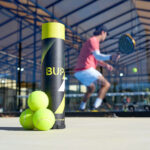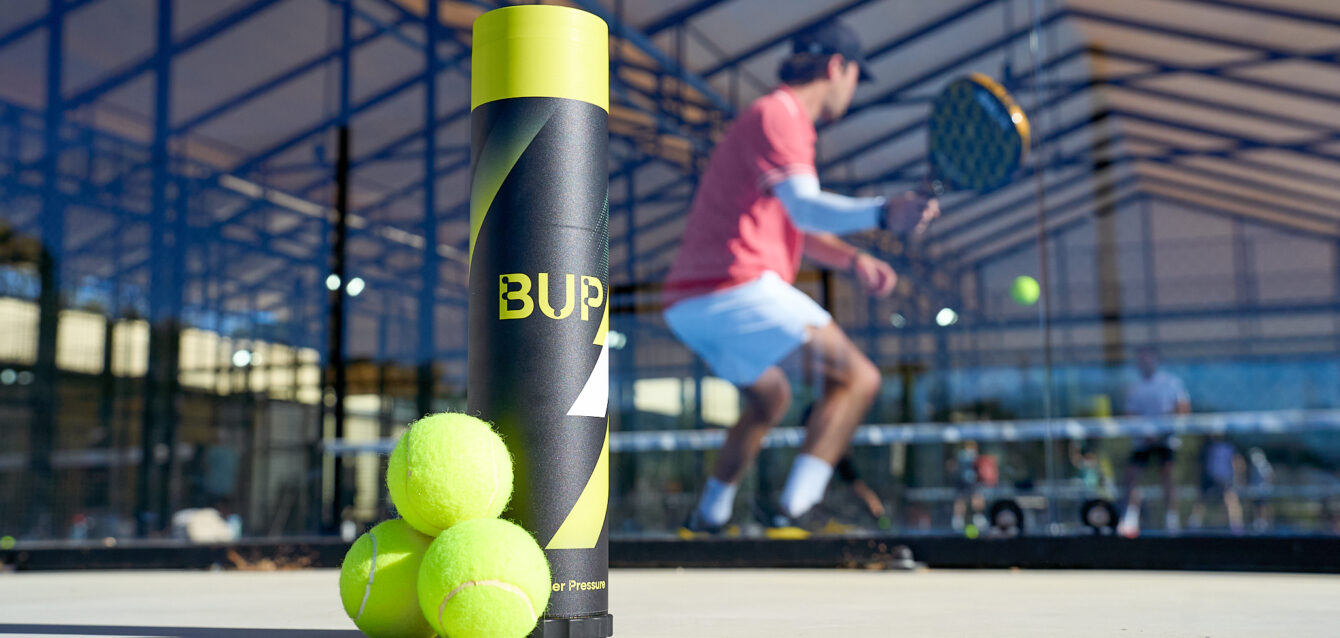
First outdoor match in November, first swings… and the ball feels heavy, slow, almost lifeless. You haven’t lost your touch: in winter, tennis and padel balls really do bounce less. The cold affects the air trapped inside the ball and its rubber. The good news is that some of this effect can be reversed—as long as you adopt the right habits. Here’s what’s happening, and how to maintain bounce all winter long, whether you’re a player or a club manager.
Why do balls bounce less when it's cold?
The air inside the ball contracts
A new ball is pressurized to about 28 PSI for tennis and 26 PSI for padel. However, in a closed space, the pressure of a gas decreases as its temperature drops: this is Gay-Lussac’s law. A drop from 20 °C to 5 °C results in a loss of about 5% of internal pressure—or 1 to 2 PSI— even though the ball hasn’t lost any air. The bounce immediately decreases.
The rubber becomes stiffer
At low temperatures, the rubber core loses its elasticity. It doesn't return the energy from the hit as well. The result: a ball that feels "harder" on contact, a lower bounce, and that sensation of hitting a rock.
Moisture makes the felt heavier
Fog, evening dew, a wet court: the felt absorbs water, making the ball heavier and slowing it down. In padel, the synthetic turf and damp glass further accentuate this effect.
What the official reference says
Tennis balls are certified under very specific conditions. The International Tennis Federation tests them after 24 hours of acclimatization at 20 °C and 60% humidity, by dropping them from a height of 254 cm onto a granite slab (ITF test protocol). The ITF itself states that temperature affects the bounce height. In short, a ball at 5 °C does not perform like an approved ball.
Cold or loss of pressure: Don't confuse the two
In winter, two phenomena occur simultaneously. Distinguishing between them prevents you from throwing away balls that are still in good condition.
| Effect of Cold | Pressure loss | |
|---|---|---|
| Cause | compressed air, stiffer rubber | air escaping through the rubber |
| Reversible? | Yes, the ball bounces better as it warms up. | No, the air that's escaped doesn't come back on its own |
| When? | as soon as the ball has cooled off | continuously from the moment the tube is opened, whether played or not |
| Solution | Store and keep the balls at room temperature | keep the balls under pressure |
The problem with winter is the combination of these two factors: a ball that’s already worn out from two weeks of play, plus the cold, and it seems lifeless on the court. Many players and clubs end up throwing away balls that were simply cold or just needed to be re-inflated. To understand air loss in detail, read “Why Do Tennis and Padel Balls Lose Pressure?”
Players: 6 Tips for Maintaining Your Jump All Winter Long
- Take the balls out of the car. The temperature in the trunk drops quickly by a few degrees at night. It's the perfect place to start a game with cold balls.
- Store them in a cool, dry place. The day before the game, keep your balls indoors at room temperature.
- Keep spare balls in the closed bag rather than leaving them at the base of the net or the window.
- Do a proper warm-up. Repeated rallies warm up the ball a little—and your joints, too.
- Let wet balls air dry; never dry them on a radiator: intense heat damages the rubber and causes air to leak more quickly.
- Keep them inflated between sessions. The MiniBUP maintains the correct pressure in 3 balls, with a compressor that shuts off automatically. Its pump-powered version, the MiniBUP Manual, reaches the correct pressure in 30 seconds: 26 PSI for padel, 29 PSI for tennis.
For more storage tips, see " How to Keep New Tennis and Padel Balls in Good Condition Longer."
Clubs: Winter—a risky season for the ball budget
Empty lunchboxes and teachers calling for change
Balls stored in a court shelter or an unheated room, early-morning lessons, tennis schools operating at full capacity: in winter, practice balls arrive on the court cold. Instructors notice a lower bounce, students complain, and the temptation to open new boxes is strong. This is often when the ball budget gets out of hand.
Padel, an increasingly popular sport
According to statistics published by the French Tennis Federation, France has 4,520 padel courts (+41% in one year) and 1,348 facilities that offer the sport (Padel Magazine, September 2026). Many of these courts are outdoors or covered by a simple canopy. Ball bounce in winter is therefore becoming a concern for a growing number of clubs, especially since padel balls are constantly in use between reservations, lessons, and tournaments.
Good Habits for the Club
- Store the baskets in a room with a moderate temperature (clubhouse, office) rather than in the court shelter.
- Take the balls out a little before the first class so they don't start at room temperature.
- Keep them separate: new balls for games, newer ones for practice, and older ones for beginner baskets.
- Store the bales under pressure. The BUP120 holds up to 120 bales: place the basket in the tank, close the lid, press a button, and the compressor shuts off automatically. One night in the tank is enough for the bales to regain 4 to 5 PSI of pressure.
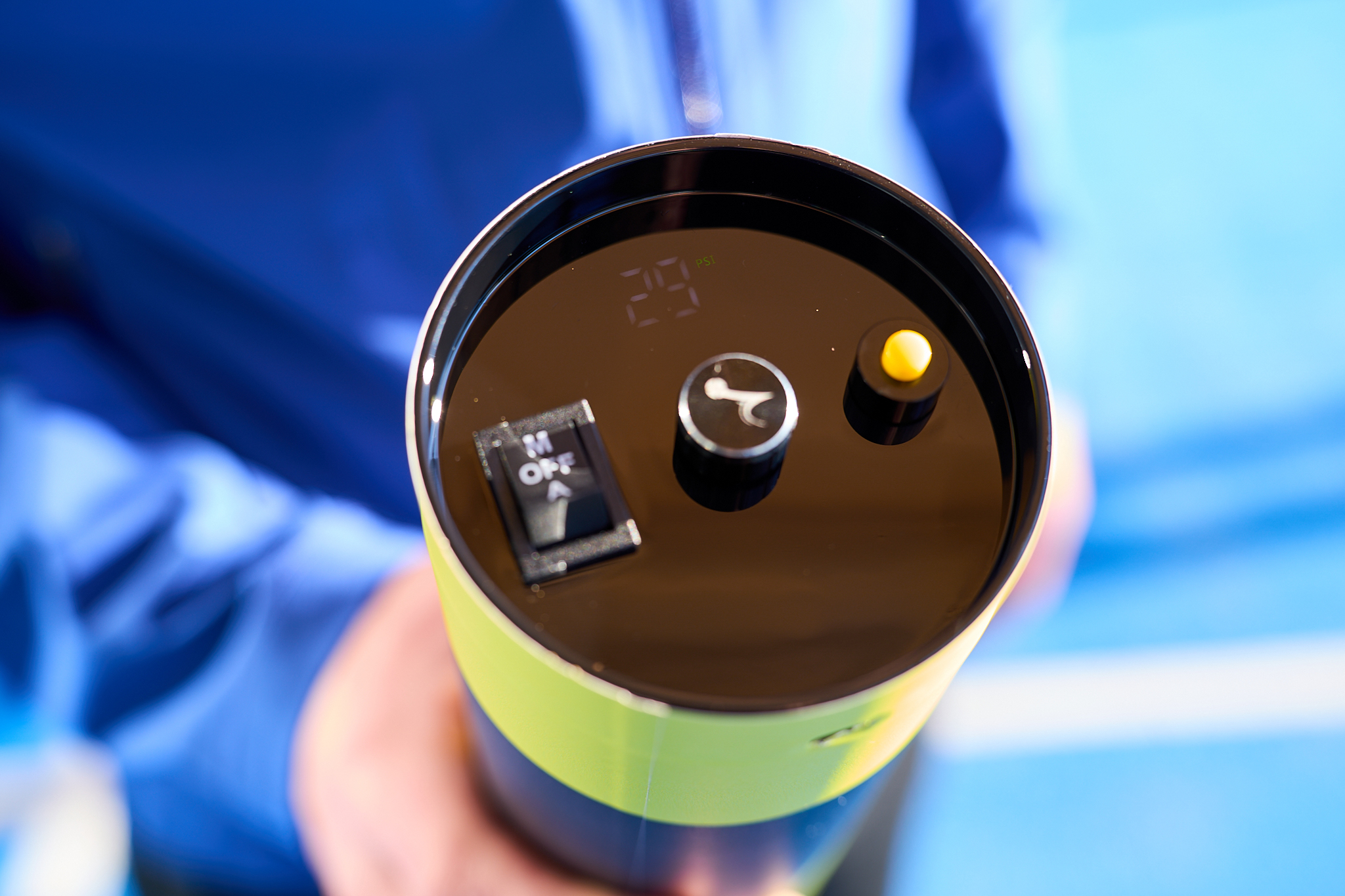
Our tip: Set up the tank in a room with a moderate temperature. This solves both winter problems at once: balls at the right pressure and the right temperature right from the first lesson.
To see what difference this makes in practice, check out our club case studies, or take stock of your expenses with our article “Tennis Ball Budget: The Secret Behind Clubs That Save Up to 50%.” Want to try it out before investing? The BUP120 is available for rent for 3 months at €240 (including tax), with no commitment —enough to get you through the winter and present real numbers to your board.
Frequently Asked Questions
Why does my padel ball bounce less in the winter?
Cold temperatures cause the air inside the ball to contract and stiffen the rubber, which reduces the bounce. Humidity also makes the felt heavier. On an outdoor court in November, all three effects combine.
Is a cold ball worth throwing?
No. If it hasn't lost its air, it will regain its bounce once it returns to room temperature. If it remains soft after being warmed up, it means it has lost pressure: see "Can You Re-inflate a Tennis Ball?"
Should you warm up your balls before a match?
Just let them sit at room temperature before playing, then warm up thoroughly. Avoid strong heat sources (radiators, hair dryers, the back seat in the sun) that can damage the ball.
Does the pressurizer work in the winter?
Yes. It compensates for pressure loss between sessions, regardless of the season. When placed in a temperate room, it also delivers balls at the right temperature. Find all the practical answers in our FAQ.
Conclusion: In winter, a slow ball isn't necessarily a dead ball.
Cold weather reduces bounce, but this effect disappears as the ball warms up. Pressure loss, however, doesn’t recover on its own. By keeping your balls at the right temperature and pressure, you’ll maintain consistent bounce all winter long, waste fewer balls, and stay within your budget. Players, check out the MiniBUP. Tennis or padel clubs, discover the BUP120.