How to Keep Tennis and Padel Balls “Like New” for Longer and Stop Throwing Away Balls That Are Still in Good Condition
Have you ever had this experience?
You open a tube, play with them… and then, a few days later, the balls are already “soft,” the bounce is lower, and the feel becomes inconsistent. The result: you end up buying a new tube too soon.
Good news: in most cases, your balls aren't dead.
They've mostly just lost their air between sessions.
In this article, we'll look at:
- Why do the balls get soft so quickly,
- how to store them properly,
- and, most importantly, how our MiniBUP and BUP120 pressurizers help maintain the proper ball pressure (and significantly reduce the ball budget).
Why a tennis ball gets soft (even if it looks fine)
A pressurized ball is designed to deliver performance… but the problem is the time “off the court.”
The rubber in a ball is porous: air escapes continuously when the ball is at rest (in a bag, on a shelf, or even in an open-and-closed tube).
So between sessions, the ball gradually loses pressure, and you’ll notice:
- less bounce,
- a ball that feels “heavier” when hit,
- less distinct trajectories,
- less fun playing… and more mistakes.
That's exactly where pressurization makes all the difference.
How long does a tennis (or padel) ball last?
This is one of the most common search terms: “tennis ball lifespan” / “soft padel ball.”
The reality:
- the ball can remain “playable” for a moment,
- But the quality (bounce, speed, feel) can decline rapidly depending on the intensity and conditions (heat, humidity, surface, force of the shot).
The key point: it isn't necessarily the wear and tear on the felt that causes the ball to lose its bounce first… it's often the loss of pressure.
How to Store Tennis Balls: Best Practices (and Their Limitations)
1) Avoid driving (heat + temperature fluctuations)
Heat and temperature fluctuations accelerate performance loss.
If you want your balls to last longer, don’t leave them in the trunk “between matches.”
2) Protect from moisture (especially when playing padel)
Moisture affects the felt, causing the ball to move more slowly and erratically.
3) Keep “match” balls and “practice” balls separate
Simple but very effective:
- match balls = premium feel,
- practice balls = volume,
- basketball shots = repetitions.
But even so… the pressure continues to drop when at rest.
The most effective solution: maintaining optimal pressure between each session
If the main problem is pressure loss at rest, then the logical solution is simple:
—place the balls in a pressurized environment to maintain their pressure.
That's exactly what BUP does.
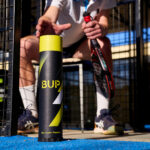
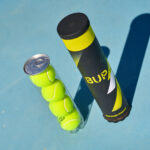
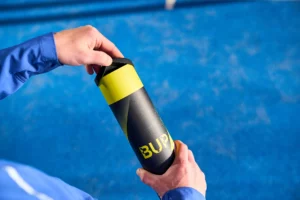
MiniBUP: The “tube-sized” pressurizer for players (tennis & padel)
If you're a player (or coach) and want a simple, portable, and truly effective solution: MiniBUP.
Here's what you'll actually get:
- You put in 3 coins after the session,
- The compressor automatically adjusts the pressure and shuts off on its own,
- At the next match, your balls will be waiting for you at the right pressure (you’ll know when you hear that “pshiiittt” sound when you open them).
MiniBUP has a clear goal: to stop throwing away balls that are still in good condition and to achieve more consistent performance from one session to the next.
BUP120: The Club Solution for Maintaining Consistent Quality and Reducing Ball Costs
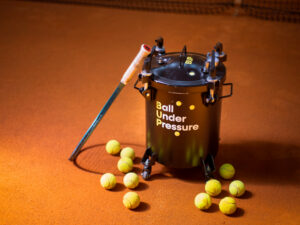
When it comes to clubs, the problem is even more acute: high consumption, rising ball budgets, fluctuating quality of play, and waste.
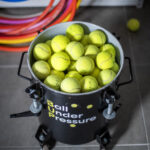
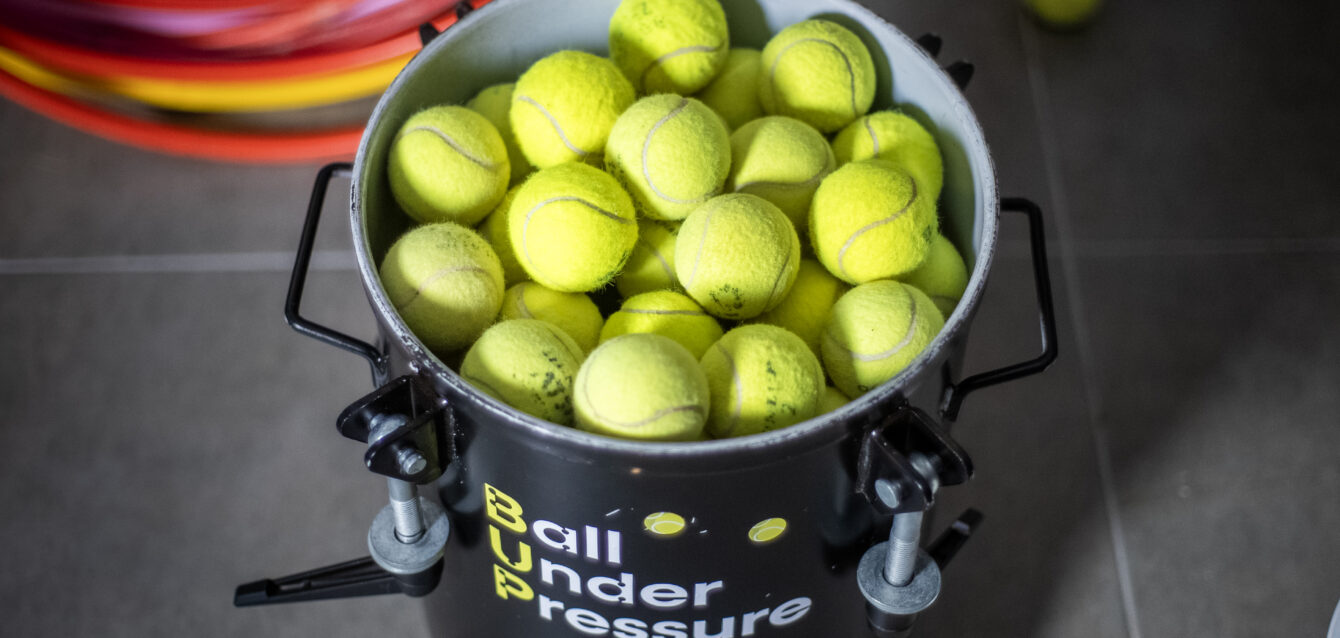
BUP120 is designed for this purpose: it automatically maintains optimal pressure for up to 120 balls, from one session to the next.
Why clubs are adopting it:
- consistent quality (more stable bounce from one session to the next),
- 30 to 50% savings on the ball budget (depending on usage),
- less waste, which is a concrete eco-friendly argument,
- A simple routine: Put the basket in the tub, close the lid, press the button, and the compressor shuts off automatically.
MiniBUP or BUP120: Which One Should You Choose?
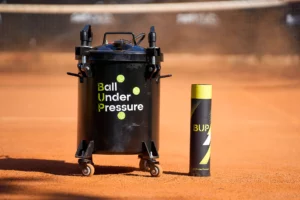
You play for yourself, you have 1–2 hits on rotation, and you want a simple tool in your bag: MiniBUP.
If you manage rosters, practices, and multiple teams, and you want a clear balance between cost and quality: BUP120.
Both address the same issue: pressure loss between sessions.
FAQ
How can you make tennis balls last longer?
Store in a stable environment + avoid heat and humidity + and, most importantly, pressurize between sessions (MiniBUP/BUP120) to maintain optimal pressure.
Can you “re-inflate” a tennis ball?
You can restore the ball 's feel if it has mainly lost pressure. However, if the felt is very worn or shaved down, the ball will still feel different: pressurizing it maintains the pressure, but it doesn't "revive" the felt.
Do pressurizers work for padel?
Yes: MiniBUP is compatible with tennis and padel, and so is the BUP120 (standard sizes).
Conclusion
If you're searching for “how to store tennis balls” or “soft padel balls,” the reality is simple:
Most of the time, your balls aren't worn out—they've just lost their air pressure.
And that is precisely the problem that MiniBUP (players) and BUP120 (clubs) solve: maintaining balls at the right level between sessions, improving feel, and reducing consumption.