A tennis ball may seem to have lost all its effectiveness after a few matches.
It doesn't bounce as much, it feels softer, and it doesn't feel the same anymore…
But is it really past its prime?
Contrary to what many players think, a tennis ball doesn’t become unusable overnight. Several factors account for its gradual loss of performance: internal pressure, wear and tear on the felt, and the stresses it undergoes during play.
Understanding these different factors allows you to manage your balls more effectively, extend their lifespan, and avoid replacing balls that are still usable too soon.
1. The first sign: a ball that bounces less
The rebound is probably the most obvious indicator for a player.
A new ball comes out of the tube with high internal pressure, giving it a dynamic bounce and an explosive feel.
Over time, this pressure gradually decreases.
Result:
- the ball doesn't go as high,
- Communication seems to be slower,
- the strikes are losing their power,
- The sensations change.
It is often at this point that players consider the ball to be “dead.”
However, in many cases, the main problem stems from a loss of pressure rather than the complete destruction of the ball.
2. A soft ball: a sign of pressure loss
When you squeeze a used ball in your hand and it feels much softer than a new one, this is usually due to a decrease in its internal pressure.
A tennis ball works because of a balance between several factors:
As the pressure drops, the ball gradually loses its original behavior.
This is one of the main reasons why repressurization solutions exist: the ball isn't necessarily destroyed; it has simply lost some of its properties.
3. The felt also wears out with use
Pressure isn't the only factor that changes.
With every stroke, the outer felt is subjected to:
- friction with the racket,
- impacts with the ground,
- the effects generated by the players.
With a high level of play—especially among players who hit very hard and use a lot of spin—this wear and tear can occur quickly.
Felt influences:
- the ball's speed,
- its trajectory,
- the effective date.
But for most recreational players, the ball loses its bounce often before the felt wears out completely.
4. How can you tell if a ball is still usable?
Here are a few simple indicators.
A ball can still be used if:
- it still bounces properly,
- the felt is still there and in good condition,
- it is not distorted,
- The feel is still acceptable for your skill level.
A ball has probably reached the end of its useful life if:
- She's completely crushed,
- it hardly bounces anymore,
- it is severely distorted,
- its felt is badly damaged or torn off.
It is important to distinguish between a ball that has lost its optimal performance and one that is truly unusable.
5. A worn ball isn't necessarily a dead ball
That is an important distinction.
A ball that is no longer suitable for an official match may still be perfectly suitable for:
- training,
- the baskets of balls,
- recreational sessions,
- technical exercises.
The problem often stems from our habit of replacing a ball as soon as it loses its initial feel.
However, before it becomes waste, a ball can still have a second life.
6. Repressurization: Extending the Lifespan of the Balls
That is precisely the principle behind BUP solutions.
Instead of immediately replacing balls that have lost pressure, repressurizing them gives them new life.
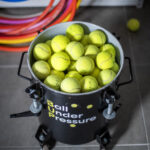
For clubs and sports facilities, the BUP120 can repressurize up to 120 balls at once. This high-capacity tank meets the daily needs of clubs, coaches, and tennis schools that use large quantities of balls.
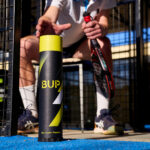
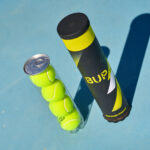
For individual players, the MiniBUP offers a compact solution for storing and repressurizing tennis balls right at home or in your tennis bag.
The goal is not to make a ball last forever, but to get more use out of a ball that still has some life left in it.
Conclusion: A worn-out ball isn't necessarily one you have to throw away
A tennis ball gradually loses its performance, but that doesn't necessarily mean it's unusable.
Before replacing it, you need to understand why it has lost its quality:
In many situations, the ball just needs a second chance.
Making better use of your tennis balls helps you save money, maintain a better feel for the game, and reduce tennis’s environmental impact.
The next time a ball seems “dead,” you might want to ask yourself whether it has truly reached the end of its life… or whether it simply needs to be re-inflated.