
Can you reinflate a tennis ball?
If you play tennis or padel regularly, you've probably experienced this frustration before: new balls that quickly lose their bounce, become less lively, and are less fun to play with.
From there, one question often comes up: Is it possible to reinflate a tennis ball?
The idea seems logical: if a ball loses pressure, theoretically all you’d have to do is add more. In practice, however, a ball’s behavior depends on several physical parameters that change over time.
In this article, we’ll explore how ball pressure works, why it decreases, and to what extent certain solutions can help mitigate its effects.
Why does a tennis ball lose pressure?
A new tennis ball is slightly pressurized inside its tube. This internal pressure, which is higher than atmospheric pressure, gives the ball its characteristic bounce and dynamic feel during play.
The problem is that this balance changes naturally.
The core of the ball is made of rubber and polymer materials that, over time, gradually allow some of the air they contain to escape. As soon as the tube is opened, the ball begins to adapt to its external environment, which directly affects its performance on the court.
It is this gradual phenomenon that explains the decline in responsiveness and responsiveness felt over the course of gameplay sessions.
Can we affect the pressure of a tennis ball?
From a physical standpoint, there are ways to manipulate the ball's environment in order to influence its pressure over time.
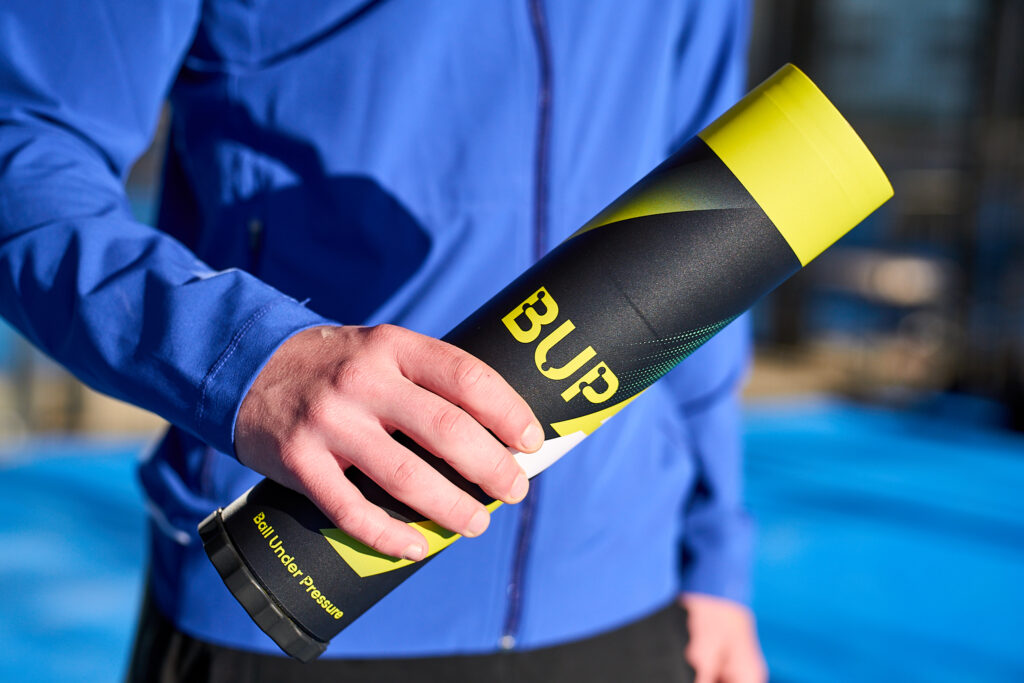
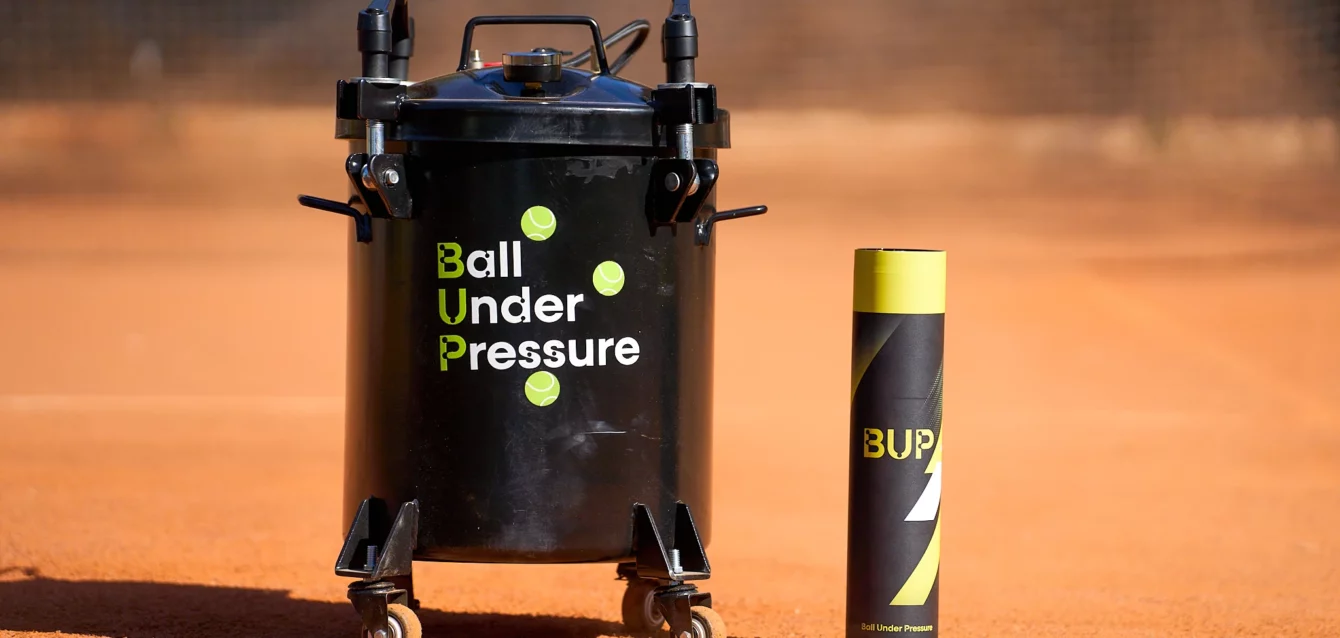
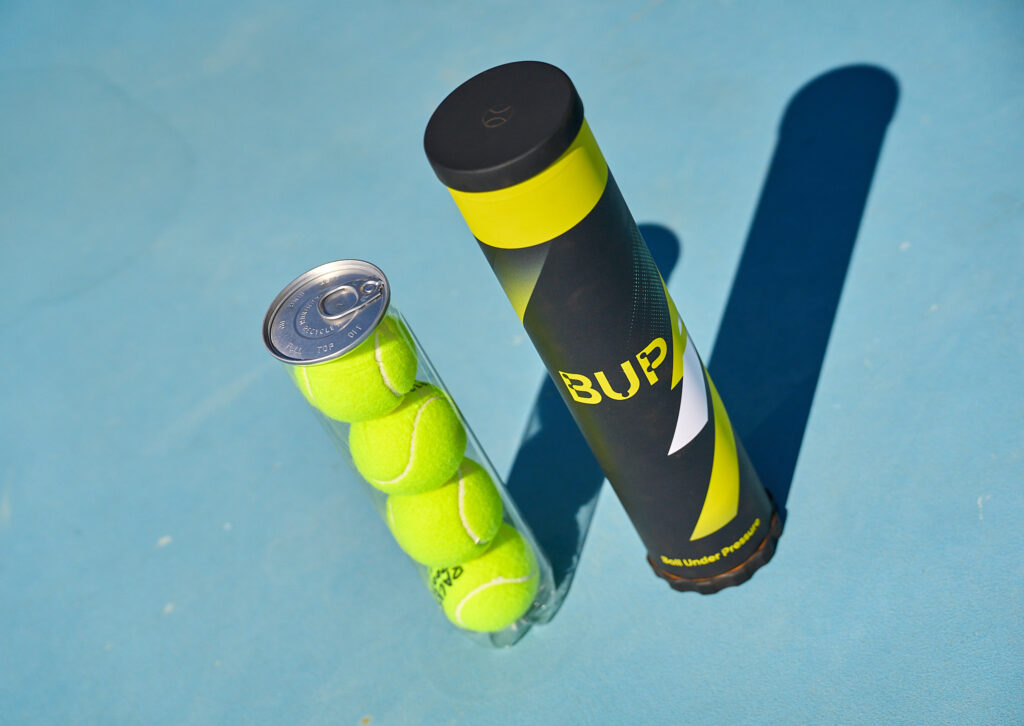
In this context, the systems developed by BUP are designed to preserve balls under pressure. The BUP120 is designed for clubs and organizations that use large quantities of balls, while the MiniBUP meets the needs of individual players.
By recreating conditions similar to those inside a closed tube, these systems help minimize natural pressure loss and preserve the balls’ playing characteristics for longer. They can also help enhance the feel of the ball during subsequent playing sessions by maintaining better overall responsiveness.
As a result, the balls maintain a consistent bounce and feel close to their optimal condition for longer, allowing you to replace them less frequently.
Why the sensation changes anyway
Even when the pressure is better maintained over time, a ball is still subject to wear and tear.
The rubber gradually wears down, and the outer felt also undergoes repeated friction during play. These two factors directly affect the quality of the bounce, the speed, and the spin.
That is why a ball continues to offer varying playing sensations depending on its history of use, even if its pressure is better controlled.
A more effective approach: stabilizing rather than replacing
Rather than focusing solely on replacing the balls, some approaches aim to stabilize the conditions under which they are used from the very first sessions.
With this in mind, systems like those from BUP allow balls to be stored in a controlled environment between matches. This helps minimize pressure fluctuations and extend the period during which the balls remain enjoyable to play with.
In practical terms, this helps maintain a more consistent feel during play and slows down the rate at which the balls lose their bounce.
In what situations does this really change the experience?
This type of solution is particularly valuable for regular players, enthusiasts, and clubs, who use a large number of balls and quickly notice a decline in performance.
By further stabilizing storage conditions, it becomes possible to extend the period during which the balls feel good to play with, without altering playing habits.
Conclusion
The concept of “re-inflating” a tennis ball actually refers to a set of phenomena related to pressure and storage conditions.
Rather than thinking in terms of one-off fixes, the main challenge is to maintain stable playing conditions for as long as possible.
It is precisely this principle that underlies the pressurized storage systems developed by BUP—including the BUP120 for facilities and the MiniBUP for individual players—which help maximize the functional lifespan of the balls and ensure a better playing experience over time.