
What is the difference between a new ball and a used ball?
In both tennis and padel, the difference between a new ball and a worn ball sometimes seems subtle at first glance. Visually, they look alike. However, when played with, the feel is completely different.
A new ball offers a lively bounce, a precise trajectory, and a sense of immediate control. A worn ball, on the other hand, often feels “heavier,” less responsive, and sometimes unpredictable.
But what really explains this difference? Is it just a matter of external wear and tear, or are there more fundamental changes in the ball's structure?
A difference that isn't just visible on the outside
When you look at a tennis ball, your first instinct is to examine its external condition: the felt, the color, and any visible wear and tear. However, these are not the main factors that affect performance.
The real difference between a new ball and a worn ball lies mainly on the inside.
A new ball is pressurized. It contains more air than atmospheric pressure, enclosed within a slightly elastic rubber structure. It is this internal pressure that causes its characteristic bounce.
Over time, this pressure gradually decreases. The material is not completely airtight, and some of the air naturally escapes. Even though this process is invisible, it profoundly changes the ball’s behavior.
The rebound: the first thing that changes
The first difference players notice is the bounce.
A new ball bounces higher and faster. It effectively returns the energy from the impact, creating a lively feel during rallies.
Conversely, a worn ball absorbs more energy. It bounces less, responds more slowly, and requires more effort to generate speed.
This difference may seem minor at first, but it quickly becomes noticeable to a regular player.
Speed and Trajectory
The pace of the game is also directly affected by the loss of pressure.
A new ball travels through the air faster and retains its energy better after impact. This results in straighter, more predictable trajectories.
A worn ball, on the other hand, loses momentum. It slows down more quickly and may seem to float in the air, especially on long shots or powerful rallies.
Control and gameplay feel
Beyond speed, it's often control that makes the biggest difference.
A new ball responds more consistently. It's easier to control spin, topspin, and slice shots because the ball's response is stable and predictable.
A worn ball becomes more unpredictable. It may react differently depending on the impact, the point of contact, or the speed of the swing. This forces the player to constantly adapt.
The role of felt: a secondary but noticeable factor
Although internal pressure remains the main factor, the condition of the felt also plays a role.
Over time, the felt wears down, becomes smoother, and loses some of its grip. This affects spin and aerodynamic drag.
However, this change is often secondary to the loss of pressure, which remains the determining factor in how the game feels.
Why Diversity Is Often Underestimated
Many players continue to use worn-out balls without always realizing just how much their performance has improved.
The change is gradual, which makes it less obvious. We unconsciously adapt to less effective balls by adjusting our game without even realizing it.
It's often only when you play with new balls again that the difference becomes obvious.
Is it possible to limit this deterioration?
A decline in performance is natural, but it can be slowed down.
The main challenge is to minimize pressure loss right from the first few uses. By reducing the difference between the ball’s internal pressure and the external pressure, it is possible to maintain a feel similar to that of a new ball for a longer period of time.
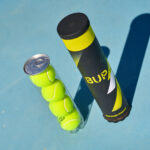
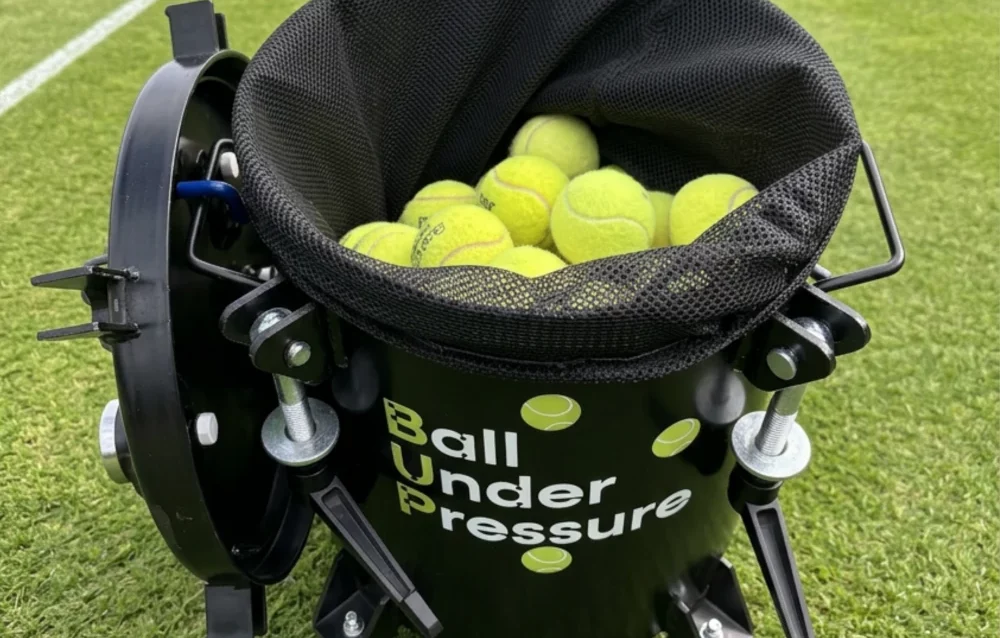
It is precisely this principle that underlies certain pressurized storage solutions, such as those developed by BUP—including the BUP120for facilities and the MiniBUPfor individual players—which are designed to extend the useful life of the balls without altering their nature.
Conclusion
The difference between a new ball and a worn ball is not limited to its outward appearance. It stems primarily from an invisible yet crucial phenomenon: the gradual loss of internal pressure.
This change directly affects bounce, speed, control, and the overall feel of the game.
Understanding this difference not only helps you play better, but also allows you to manage your balls more effectively and avoid playing with equipment that is already significantly worn out without realizing it.
Ultimately, a worn bullet isn't simply a "damaged" bullet; it is, above all, a bullet that has lost some of its essential physical properties.