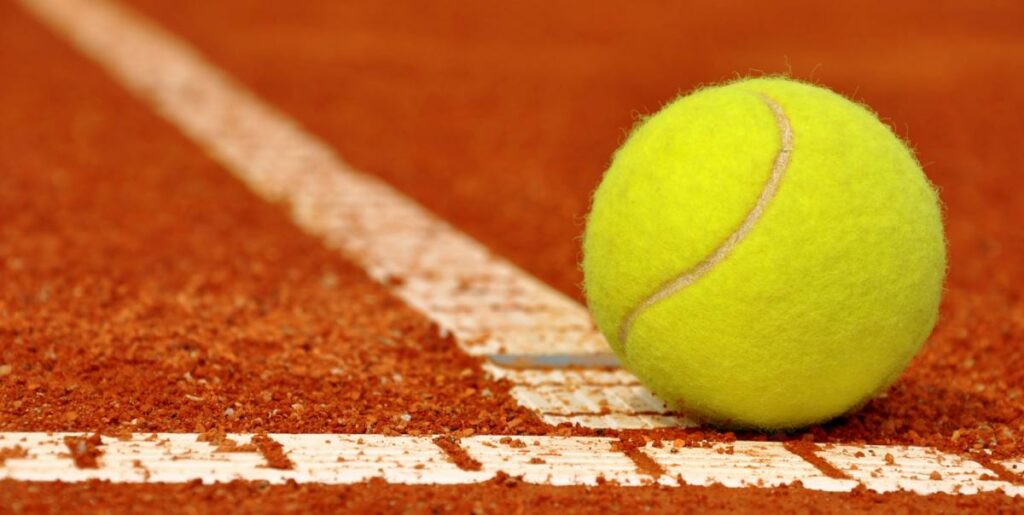

How long does a tennis ball actually last?
If you play tennis regularly, you've probably experienced this all-too-familiar feeling: a tube of new balls, a perfect bounce, a sense of control and ideal speed. Everything feels smooth, precise, almost effortless.
Then, after just a few matches, something changes. The balls become slightly slower, less lively, and less enjoyable to play with. They don’t feel the same anymore, even though they look perfectly fine.
This raises a question that most players ask themselves: How long does a tennis ball actually last?
The answer is more complex than it seems, because a ball's lifespan depends not only on visible wear and tear, but mainly on invisible factors related to its internal pressure.
Why does a tennis ball wear out?
Contrary to popular belief, a tennis ball does not lose its performance solely due to wear and tear on the outer felt. In fact, the main factor is much less obvious: the gradual loss of pressure.
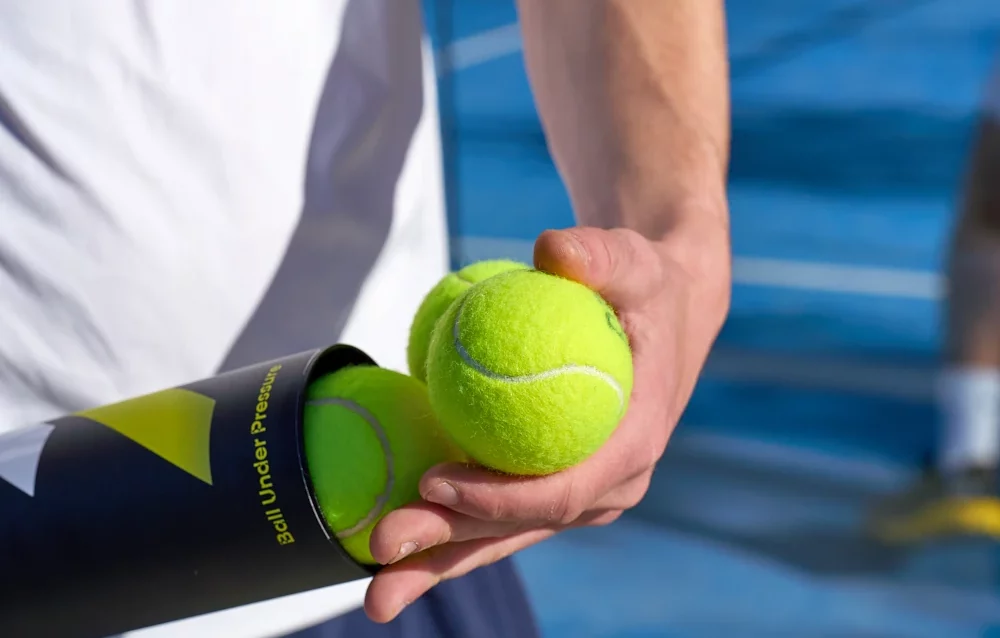
When a ball is new, it is contained in a pressurized tube that helps it maintain optimal bounce. It is this internal pressure—slightly higher than atmospheric pressure—that gives the ball its characteristic bounce.
However, once the tube is opened, a natural process begins immediately. The rubber that makes up the core of the ball is not completely airtight. Over time, some of the air gradually escapes through its porous structure.
This phenomenon is slow but steady. And even though the ball may look the same on the outside, its behavior changes: it bounces lower, loses speed, and becomes less responsive during rallies.
How long does a tennis ball remain in good condition?
There is no one-size-fits-all timeframe, as it depends primarily on the player’s profile and the intensity of use.
For a casual player who plays about once a week, a ball can maintain a satisfactory feel for several weeks. However, even in this case, performance begins to decline well before the ball actually looks worn out.
For a regular player who plays two or three times a week, a decline in performance usually becomes noticeable after just a few sessions. Shots seem less powerful, trajectories less sharp, and accuracy slightly reduced.
Finally, in competitive or intensive training settings, balls are replaced very frequently. The goal is no longer to extend their lifespan, but to ensure perfect consistency in playing conditions.
Factors that accelerate this deterioration
The lifespan of a tennis ball depends not only on the passage of time, but also on several external factors that directly affect its structure.
The first factor is, of course, how often the ball is played. Every rally puts mechanical stress on the ball, which accelerates the gradual loss of pressure.
The type of surface also plays an important role. Hard courts, for example, place greater stress on the felt and the ball’s overall structure, which accelerates the rate of wear. Conversely, some softer surfaces allow for slightly slower wear.
Temperature is another factor that is often underestimated. High heat can temporarily alter the ball's internal pressure, while colder temperatures reduce its elasticity and responsiveness.
Finally, storage conditions have a direct impact on the lifespan of the bales. Environments that are too hot, too humid, or subject to significant temperature fluctuations can accelerate performance degradation, even when the bales are not in use.
How can you tell if a ball has lost its performance?
A "worn-out" ball isn't just recognizable by its outward appearance. In most cases, it's the feel of the ball during play that changes first.
The bounce is gradually losing its power. The shots seem less explosive, and the ball doesn't respond as precisely to spin. Even though it's still playable, the playing experience is clearly different from that of a new ball.
This is often when players replace their balls—not because they're unusable, but because they no longer feel the same.
Can we slow down this trend?
Pressure loss is a natural process, but it is not entirely impossible to limit its effects.
One of the most important factors is how the balls are stored between playing sessions. By avoiding extreme temperature fluctuations and limiting their exposure to the air, it is possible to maintain their performance for longer.
This is, in particular, the approach developed by BUP using pressurized storage systems. The BUP120 is designed for clubs, coaches, and organizations that handle large quantities of balls, while the MiniBUP is geared more toward individual players who want to preserve their balls between sessions. In both cases, the goal remains the same: to minimize pressure loss in order to maintain a playing feel similar to that of a new ball for as long as possible.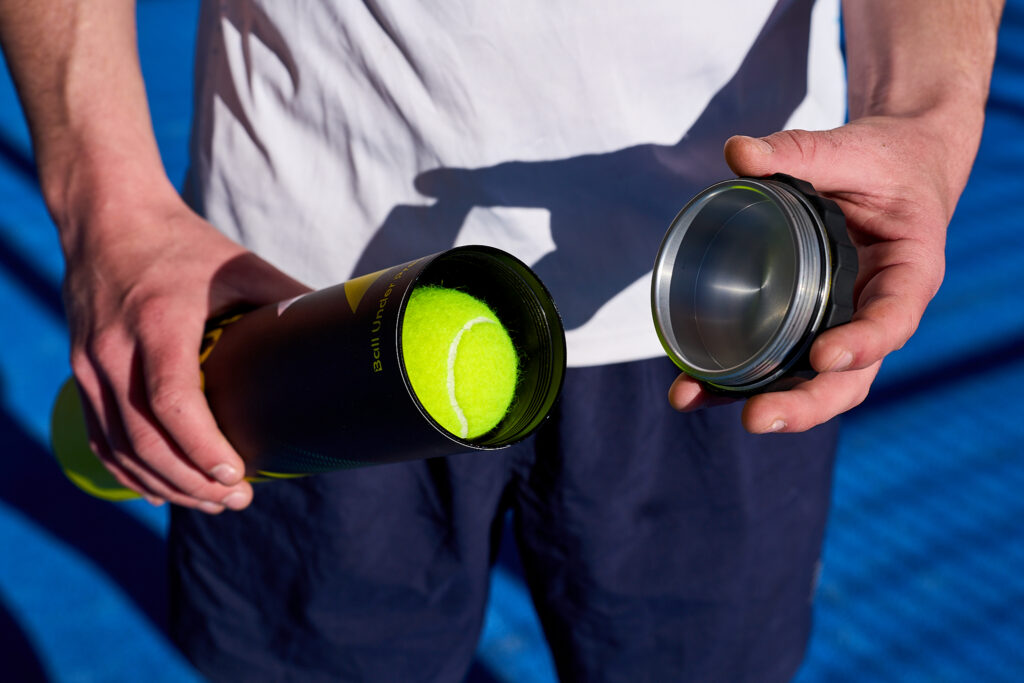
Conclusion
The lifespan of a tennis ball depends heavily on the player's playing style, but one thing is certain: its performance begins to decline long before visible signs of wear appear.
For a casual player, it can remainsatisfactory for several weeks, whereas for a more frequent player, the deterioration is often noticeable much sooner.
Understanding this phenomenon not only helps you better understand how the ball feels during play, but also allows you to adopt smarter habits to extend the ball’s lifespan.
And in a sport where every detail counts, maintaining the quality of the bounce can make a real difference.