
In an era when sustainability and environmental responsibility have become
top societal priorities, it is surprising to see how tennis and
padel balls still lie outside this movement. These iconic objects of our favorite sports
are today a striking example of a product that is both extremely polluting and has a
ridiculously short lifespan.
From their intensive, resource-intensive production to their inability to be recycled,
each ball embodies an ecologically disastrous life cycle. Let’s dive into the
details of this issue to understand why it is urgent to rethink our
consumption and our relationship with tennis and padel balls.
A complex, polluting product
Tennis and padel balls are much more than just items used for play. Their production
involves a long, energy-intensive, and international process that significantly contributes to their ecological footprint
.
- A 50,000-kilometer Journey for a Ball
To produce a ball, it must travel through 11 different countries, covering up to 50,000 km before reaching the consumer. This global cycle, combined with intensive transportation, generates massive CO2 emissions. Each ball produces an average of 1.2 pounds of CO2, making their production a significant climate issue. - A Problematic Composition
The balls are made of two main materials:
● The rubber core: The rubber used in manufacturing often
comes from intensive plantations, contributing to deforestation and the destruction
of ecosystems.
● The outer felt: This blend of wool and nylon (a petroleum-based plastic)
is designed to improveaerodynamics and durability. However, these materials
are non-biodegradable and contribute to global plastic pollution.
virgin plastic cans The balls are sold in thick plastic tubes, often made from non-recycled plastic
. Why? Because recycled plastics do not provide a tight enough seal to maintain the pressure needed to preserve the balls.

A ridiculously short lifespan
One of the most problematic aspects of tennis and padel balls is their incredibly short lifespan
, especially when compared to the resources required to produce them
.
● For amateurs: A ball can be used for 3 to 4 practice sessions
before it loses its bounce and becomes unusable.
● For professionals: The rules require that balls be replaced every
7 to 9 games. During a tournament like Wimbledon, for example, 54,000 balls
are used in just two weeks, generating more than 3.5 metric tons of
waste.
The reality is stark: the majority of these balls will end up in landfills or
be incinerated, with no possibility of recycling.
A colossal environmental impact
- Non-biodegradable waste
Tennis and padel balls are designed to last on the court, but this durability is an environmental nightmare.
● Decomposition time: It takes about 400 years for a ball to decompose.
● Methane emissions: As they break down, the balls releasegreenhouse-
gases such as methane, which has a global warming potential 28 times
greater than that of CO2. - Plastic Pollution and Microplastics
The nylon felt on the balls gradually breaks down with each hit, releasing microplastics into the air and soil. These invisible particles end up in our
oceans, contaminating marine ecosystems and, ultimately, the human food chain.
● Impact on the oceans: Some of the microplastics end up in the oceans, where they
are ingested by plankton, fish, and ultimately… us. On average, a human
consumes between 74,000 and 121,000 microplastics per year, and the felt cores of
balls contribute to this.

Can we do better? The limits of current initiatives
In response to this situation, a few initiatives are emerging, but they are still insufficient to fully resolve the problem.
- Eco-Friendly Balls
Some brands, such as Wilson with its Trinity line, have ventured into the
production of “more sustainable” balls. These pressureless balls use an elastomer core that extends their lifespan. However, they still fall far short of meeting professional players’ expectations in terms of performance. - Recycling Used Balls
Startups like Renewaball in the Netherlands and U.S. initiatives suchas
RecycleBalls are attempting to recover used balls to reuse their materials:
● Partial recycling: The felt is separated from the rubber to manufacture new
products (clothing, court surfaces, etc.).
● Limitations: These initiatives remain costly and limited in scope, falling far short of being able to
process the 325 million balls produced each year.
The solution: rethinking how we use bales
While manufacturing truly eco-friendly balls remains a challenge, there are steps we can take right now
to reduce their environmental impact:
- Extending the lifespan of balls
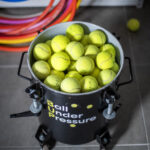
Solutions such as the BUP pressurized bucket restore the pressure
in worn-out balls, making them usable well beyond their usual lifespan.
This reduces waste and limits the need for repeat purchases, while providing
consistent performance for players. - Raise awareness among clubs and players
Clubs and coaches need to be informed about the available alternatives. For example,
encouraging the use of refurbished balls or pressurized storage systems
can make a big difference. - Recycling Used Balls
Although limited, the recycling of balls should be encouraged. Clubs can
partner with initiatives such as Renewaball or RecycleBalls to give
a second life to used balls.

Conclusion: Tennis and Padel at an Environmental Turning Point
Tennis and padel balls symbolize a glaring contradiction in our environmental efforts
. Their intensive production, short lifespan, and massive ecological impact
make them products that urgently need to be reimagined.
But all is not lost. With solutions like pressurized storage to extend
their lifespan and recycling initiatives, we can reduce their impact starting
today. For clubs, coaches, and players, these efforts aren’t just
a matter of cost savings, but a real step toward a sport that’s more respectful of the planet.
At the end of the day, it's not just about playing better, it's about playing sustainably.